My name is Yun-Fei Liu. In less formal settings, I call myself Takua. The namesake is another story, which you may find here.
Research
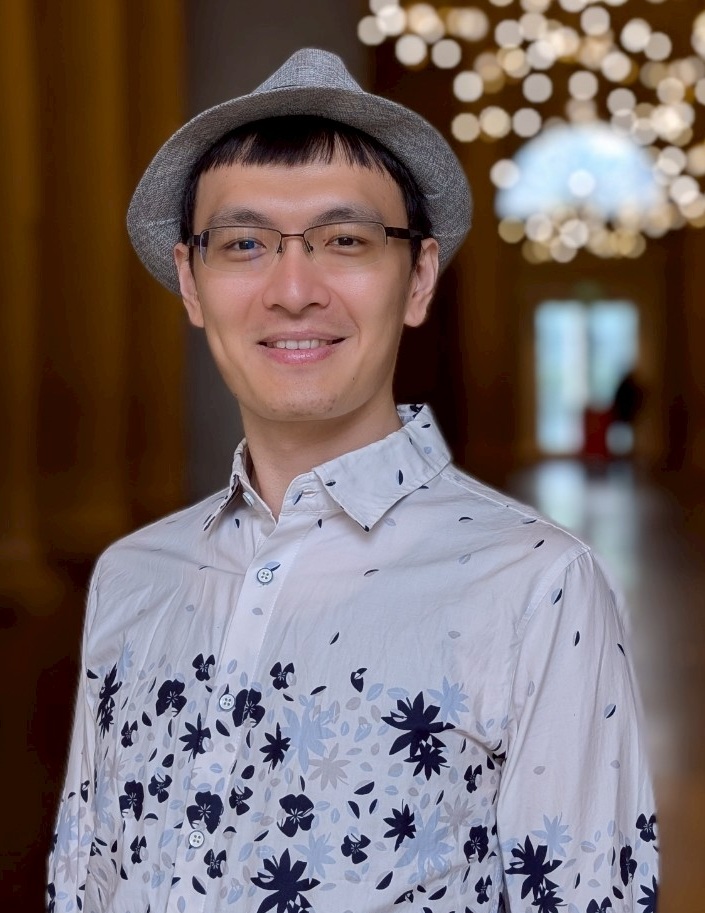
My research program examines how the human brain acquires modern symbolic systems such as computer programming, mathematics, and reading. Using behavioral experiments, neuroimaging, and computational modeling, I study how evolutionarily older reasoning and language systems are “recycled” for newly invented cognitive skills. This interdisciplinary work bridges cognitive neuroscience, computer science, and education to reveal how learning transforms neural representations and supports “computational thinking”, an essential skill in the era of artificial intelligence.
One central line of my work investigates how the brain represents the logic and algorithms of computer code. I have shown that programming engages the domain-general fronto-parietal reasoning network rather than classical language circuits, and that neural activity patterns within this system encode algorithmic structures such as “for” loops and “if” conditionals.
In a longitudinal study conducted in collaboration with the Department of Computer Science, I further found that neural representations of these algorithms emerge before formal programming instruction and are reinstated after learning, demonstrating how reasoning systems are rapidly “recycled” for programming. Ongoing projects will extend this work by integrating eye-tracking, EEG, and fNIRS to power naturalistic paradigms, through which I will further investigate the cognitive and neural development of programming expertise. In addition, I will use large language model embeddings of computer code to compare how human and artificial systems similarly/differentially represent algorithmic meaning, with the ultimate goal of fostering effecient human-machine collaboration.
A complementary line of research examines how literacy can emerge through touch rather than vision. Studies of braille reading in congenitally blind individuals reveal that orthographic processing can reorganize the parietal cortex, beyond the ventral occipito-temporal pathway which has been implicated in print reading. This research showed how cultural learning reconfigures the functional architecture of the brain and find the most suitable “neuronal niche” for an acquired behavior (reading) in different sensory modalities (via vision or touch).
Collectively, my research seeks to uncover how cultural learning repurposes brain systems for new forms of reasoning and communication. By combining naturalistic experiments, computational modeling, and cross-modality comparisons, my work advances both fundamental neuroscience on neuroplasticity and its applications in education, accessibility, and human-AI collaboration.
Professional background
I am currently a postdoctoral researcher in Dr. Marina Bedny’s Neuroplasticity and Development Lab at Johns Hopkins University (JHU). I received my PhD in Psychological and Brain Sciences from JHU, and previously worked at Princeton University with Dr. Uri Hasson on the integration of large-scale naturalistic fMRI data and the application of shared-response model to identify neural responses during natural scene comprehension.
Before coming to the United States, I earned a BS in Electrical Engineering and an MS in Biomedical Engineering from National Taiwan University. My interest in cognitive neuroscience and cultural recycling led to my master degree work on natural Chinese reading using fMRI and inter-subject correlation methods. While in Taiwan, I also worked at NeuroSky, providing technical and theoretical support for the commercialization of electrophysiological signal detectors, including electroencephalography (EEG, or “brain waves”) and electrocardiography (ECG, or “heart waves”). These experiences strengthened my commitment to bridging basic research with practical applications, grounded in my belief that science should advance both knowledge and societal well-being.
Currently, in parallel to my academic research, I serve as a data analyst for the Center for Scientific Integrity (known for its blog “Retraction Watch“). I am part of its most recent Medical Evidence Project, where forensic meta-analytic methods are used to detect errors and potential fraud in influential medical research. I design and implement large-scale data pipelines that parse, clean, and analyze meta-analytic records from the Cochrane Database of Systematic Reviews and other sources, automating the detection of statistical anomalies. This work reflects my dedication to strengthening scientific integrity and ensuring that evidence-based medicine is built upon accurate and trustworthy data.
About this website, and beyond research
On this website, you will find introductions to my ongoing projects (under the “Research” tab. Actually, the sections above already contain direct links to those pages), as well as academic resources and tools that I have developed over the years (under the “Resources” tab). I also occasionally share updates about new publications, talks, collaborations, or research-related thoughts, which you can find in the “Blog&News” tab.
There is, of course, more to me than my professional work. My long-standing interests in anime and gaming – particularly my twenty years of adventures in World of Warcraft – have shaped how I think about world-building, aesthetics, and human creativity. These passions are an integral part of who I am. Although this website remains focused on the professional aspects of me, if you are curious about these other dimensions or simply wish to connect, you are very welcome to reach out!